
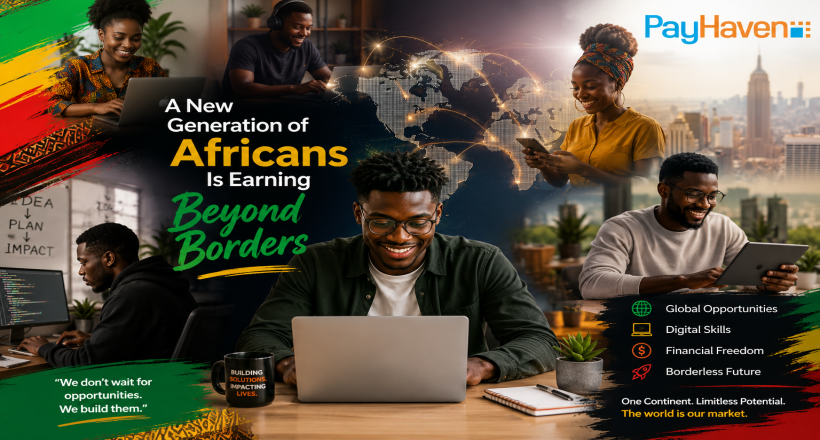
A New Generation of Africans Is Earning Beyond Borders
A few years ago, the idea of building an international career without leaving your country felt unrealistic for many Africans.
Today, that reality has changed completely.
Across Nigeria, Kenya, Ghana, South Africa, and other parts of the continent, a new generation is building careers that are no longer limited by geography. Designers are working with startups in Europe. Developers are building products for companies in the US. Creators are earning from global audiences. Freelancers are getting paid by clients they’ve never met in person.
The internet didn’t just create new jobs.
It changed where opportunity comes from.
And for many young Africans, that shift has been life-changing.
What makes this generation different is not just ambition, it’s access.
People no longer have to wait for opportunities to exist locally before they can grow professionally. A laptop, internet connection, and the right skill can now connect someone in Lagos to a company in Toronto or a client in London.
That kind of access would have sounded impossible not too long ago.
But while work has become global, one thing still feels surprisingly local:
The financial systems surrounding it.
A lot of people are now earning internationally, but the process of receiving and managing that money still comes with friction.
Payments get delayed.
Exchange rates fluctuate unexpectedly.
Cross-border transactions can feel unnecessarily complicated.
In many cases, people have adapted to these issues simply because they happen so often. It becomes normal to expect delays, hidden deductions, or uncertainty around when money will arrive.
But as more Africans participate in the global economy, those experiences are starting to feel outdated.
Because if work has evolved, the systems supporting that work should evolve too.
There’s also a deeper shift happening beneath the surface.
Young Africans are thinking differently about money itself.
For many, income is no longer tied to one currency, one country, or even one source. Someone might earn in dollars, spend in naira, save in another currency, and work with people across multiple time zones all at the same time.
That changes how people think about financial tools.
Convenience alone is no longer enough.
People care more about:
- flexibility
- transparency
- speed
- security
- and how much control they have over the process
The financial experience is becoming just as important as the payment itself.
This is one of the reasons newer financial platforms are gaining attention across Africa.
Not because people want “more apps,” but because they want systems that actually fit the way they live and work now.
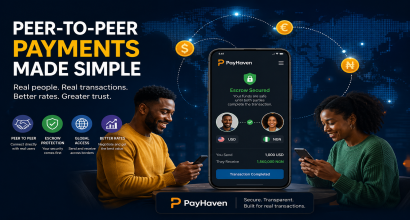
Platforms like PayHaven are part of that shift.
As more Africans build borderless careers and businesses, there’s growing demand for platforms that make cross-border transactions feel simpler, safer, and more aligned with modern work.
It’s no longer just about receiving money.
It’s about receiving it in a way that feels smooth, reliable, and built for the reality of today’s global workforce.
What’s happening right now across Africa is bigger than fintech.
It’s a cultural and economic shift.
A generation that once had to look outward for opportunity is now participating in the world more directly than ever before. Not by relocating, but by connecting.
And while the conversation often focuses on technology, the real story is about people.
People building careers beyond borders.
People creating income without geographic limits.
People redefining what work can look like from Africa.
That shift is still growing.
And honestly, it feels like we’re only at the beginning