
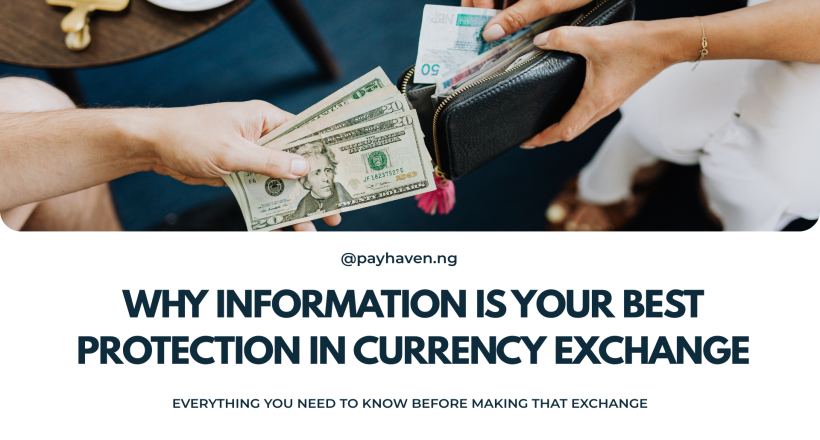
Why Getting the Right Information Before Currency Exchange Can Save You Money and Stress
In today’s increasingly global and digital economy, currency exchange has become a routine part of life for many people, whether you’re a freelancer getting paid in foreign currency, a business owner making international transactions, or simply sending money across borders.
But while access to exchange services has improved, so have the risks associated with them. What seems like a simple transaction can quickly turn into a costly mistake if you don’t have the right information.
One of the biggest challenges in currency exchange today is information asymmetry where the platform or individual you’re transacting with knows far more than you do. This imbalance often leads to poor decisions, especially when users rely on surface-level details like “attractive rates” without understanding the full breakdown of the transaction.
For instance, a rate that appears higher than the market average might initially seem like a win. However, in many cases, that advantage is offset by hidden charges, inflated margins, or unclear payout structures. By the time the transaction is complete, you may realize that you received far less value than expected.
Even more concerning is the rise of exchange-related scams. These scams are often built on three key triggers: urgency, trust manipulation, and unrealistic offers. A scammer may pressure you to act quickly to “lock in a great rate,” present themselves as a reliable middleman, or promise returns that simply don’t align with real market conditions. Without proper verification, many people fall into these traps.
So, what does being truly informed look like?
First, it means understanding the real market rate. Exchange rates fluctuate constantly, and having a baseline reference allows you to quickly identify offers that are either unfair or suspicious.
Second, it involves demanding full transparency. A trustworthy platform or provider should clearly outline the rate, applicable fees, and the exact amount you’ll receive before you commit to the transaction.
Third, it requires taking your time. Any platform or individual that pressures you into making a quick decision should be approached with caution. Legitimate services prioritize clarity and user confidence over urgency.
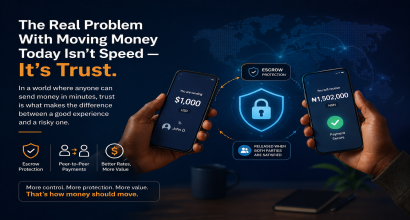
Finally, and most importantly, being informed means choosing reliable and secure platforms systems that not only facilitate transactions but also protect users through safeguards like escrow, verification processes, and dispute resolution mechanisms. These features are not just add-ons; they are essential layers of protection in today’s financial landscape.
At its core, currency exchange is not just about converting one currency into another. It’s about preserving value, minimizing risk, and building trust over time. Each transaction you make should not only meet your immediate need but also strengthen your confidence in the system you’re using.
The difference between a smooth transaction and a costly mistake often comes down to one thing: how much you know before you begin.
Because in currency exchange, information isn’t just power, it’s protection.